We Design, Manufacture & Ship Nationwide.
0% APR for 60 months*
Fill Out The Form Below To Request A Custom Quote
Your privacy is important to us. We’ll never share your information for any reason.
Wrought Iron Fencing Are Our Specialty
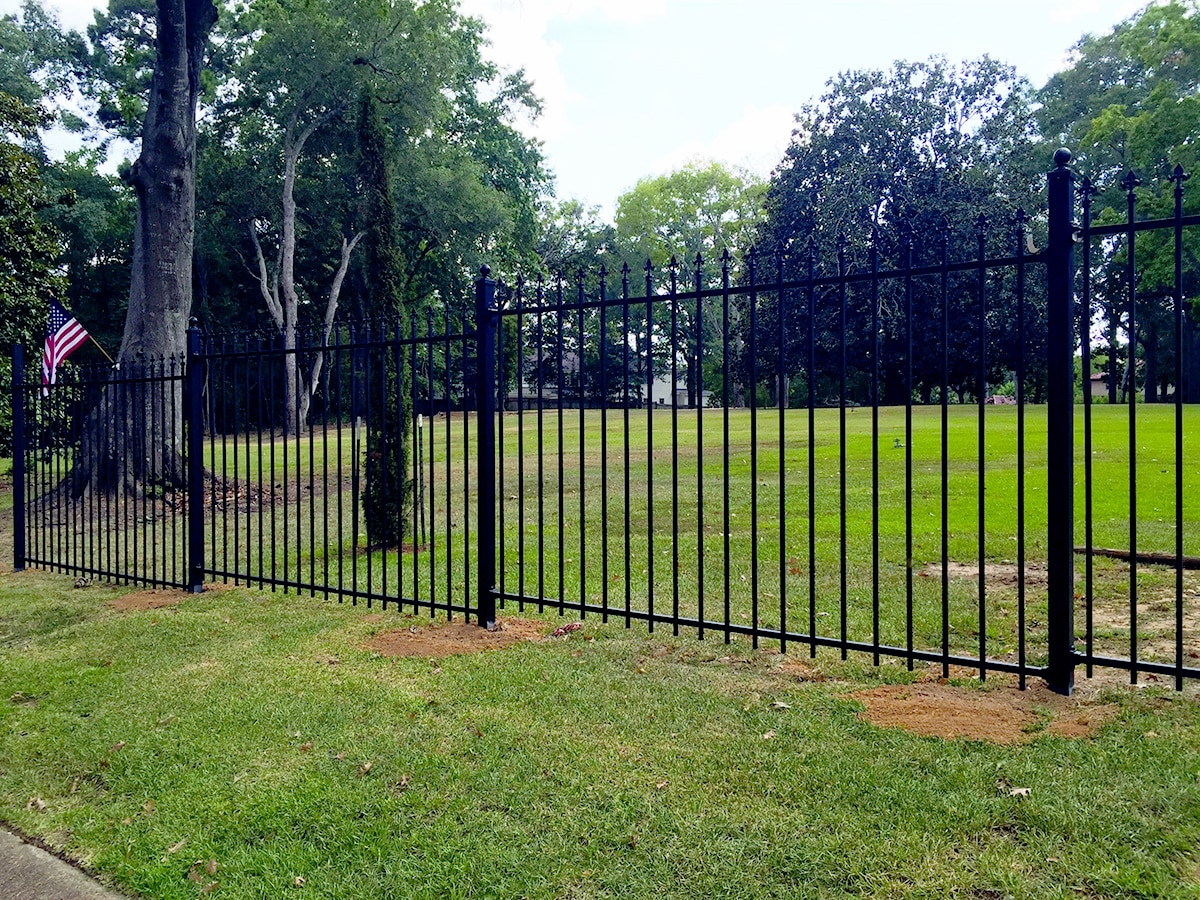
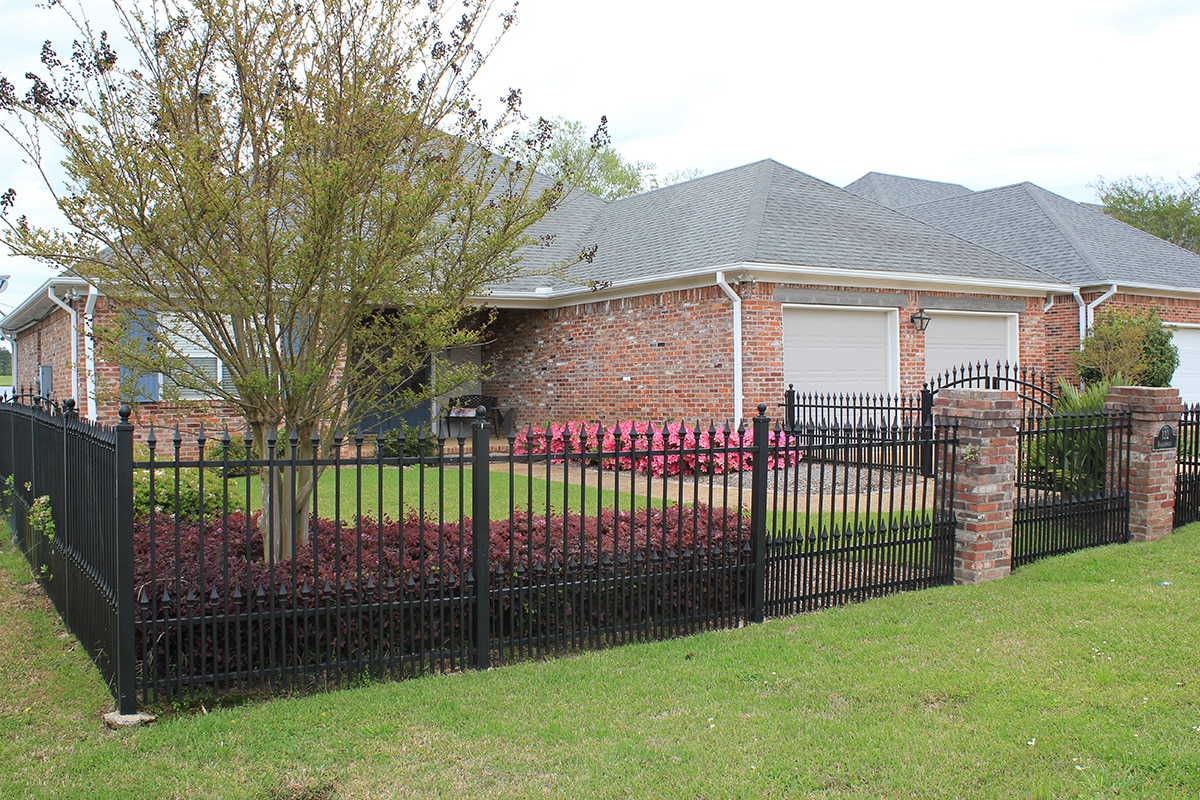
Keep children and pets in while keeping unwanted guests out with a custom fence from Iron Works USA. We custom build our fences to fit any need you may have including privacy and keeping small pets in. Give us a call or fill out the form below to receive a FREE quote today!
We custom build each of our iron fences to fit any style, size, and color for your home or business. Our team will also measure, deliver and install your new iron fence if you are within our service areas.
- Wrought Iron Fences
- Ornamental Iron Fences
- Custom Designed Iron Fences
- Black Rod Iron Fences
- Wrought Iron Garden Fences
- Fancy Iron Fences
Frequently Asked Questions About Wrought Iron Fences
Understanding Wrought Iron Fences
What is a wrought iron fence?
A wrought iron fence is crafted from forged iron that has been heated and shaped into panels, pickets, rails, and decorative elements. The hands-on fabrication process distinguishes wrought iron from other cast or extruded metals. These fences are structurally durable, serving as security barriers or property boundary markers while also contributing to outdoor architectural aesthetics.
Iron Works USA fabricates all fences to order. Every fence is built to the exact dimensions and specifications of your property.
Why have wrought iron fences been used for centuries?
Wrought iron has been used in property fencing for hundreds of years. It offers reliable durability for security measures and a timeless visual character. Many wrought iron fences installed generations ago are still standing today, which is a testament to the material’s longevity when properly maintained.
What is the difference between wrought iron and cast iron fencing?
Wrought iron and cast iron differ significantly in composition and properties. Wrought iron has a very low carbon content (below 0.08%), making it malleable, ductile, and highly fatigue-resistant. It is ideal for a fence that may absorb occasional physical impacts.
Cast iron contains 2% to 4% carbon and is produced by pouring molten metal into molds. Cast iron is more brittle and prone to cracking under impact loads.
What is the difference between wrought iron and ornamental iron fencing?
Although used interchangeably, there is a technical distinction:
- Wrought iron is a specific material with low carbon content and slag fiber inclusions.
- Ornamental iron fencing is a broader category that includes fences made from mild steel or other iron alloys shaped into decorative forms.
We use these terms interchangeably to describe our handcrafted custom fence products.
What is a "rod iron fence"?
Many people misspell or misunderstand the term “wrought iron” as “rod iron.” There is no formal product category called rod iron in the fencing industry. When someone searches for a “rod iron fence” or a “black rod iron fence,” they are almost always describing a wrought iron or ornamental iron fence.
What is the lifespan of a wrought iron fence?
A wrought iron fence can last anywhere from 50 to 100 years or more. Its extensive lifespan is one of the reasons why wrought iron justifies its higher upfront cost compared to wood, vinyl, or chain link. However, factors that affect its lifespan can include the fabrication quality, protective finishes, and maintenance consistency over the years.
Types and Styles of Wrought Iron Fences
What types of wrought iron fences does Iron Works USA offer?
Iron Works USA manufactures wrought iron fencing products that serve virtually every residential and commercial fencing need.
- Wrought Iron Fences: Standard residential and commercial fence panels in a variety of heights and styles
- Ornamental Iron Fences: Decorative fence panels featuring artistic elements such as scrollwork, finials, and custom motifs
- Custom Designed Iron Fences: Fully bespoke fence panels and systems built to client-specified designs and dimensions
- Wrought Iron Garden Fences: Smaller-scale decorative fencing for garden beds, landscape borders, and courtyard enclosures
- Fancy Iron Fences: Elaborate decorative designs featuring intricate scrollwork, floral patterns, and ornamental panel work
What design styles are available for wrought iron fences?
The design flexibility of wrought iron is one of its defining advantages. We can produce fencing in a wide range of styles to suit every architectural context:
- Flat Top: Clean horizontal top rail with evenly spaced vertical pickets; A simple, modern design suitable for commercial and residential properties.
- Straight Top With Finials: Standard picket fence topped with decorative finials at each picket tip; The most widely used residential iron fence style.
- Arched Top: Panels with a curved arch across the top rail, adding elegance and visual interest; Popular for garden areas, entryways, and traditional homes.
- Scalloped Top: Panels where the top rail follows a gentle wave or scallop profile between posts; Creates a softer, more decorative silhouette than a straight top.
- Spearhead / Gothic Top: Individual pickets terminate in pointed spear-shaped tips for a strong security statement and classical appearance.
- Fleur-de-lis: Pickets topped with the distinctive lily-shaped decorative element, adding French and traditional European character.
- Ball Top: Post caps and picket tops feature rounded ball elements for a softer, more decorative look; A common choice for pool fences and garden applications.
- Ornamental / Scrollwork: Panels incorporating curved scroll elements, basket patterns, and vine motifs between pickets for a heavily decorative appearance.
- Modern / Flat Bar: Horizontal or vertical flat bar designs with minimal ornamentation for contemporary homes and commercial settings.
- Custom: Any combination of elements or a fully original design developed specifically for your property.
What finish and color options are available for wrought iron fences?
Classic matte black or satin black is by far the most popular finish for wrought iron fences. Additional color options can include oil-rubbed bronze and dark brown, as well as hammered finishes. Custom color requests can be discussed during your consultation.
We apply a durable powder coat finish to all fences, which electrostatically bonds the color to the metal and cures it at high temperature. This produces a finish far more resistant to chipping, scratching, UV fading, and moisture.
What are finials?
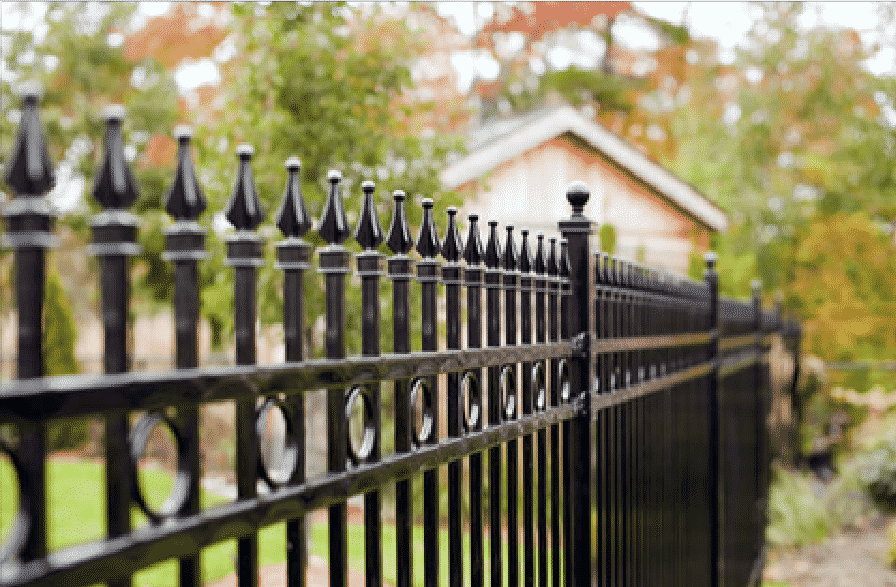
Finials are the decorative tips placed at the top of each vertical picket. Arguably the most iconic visual element of an iron fence, they can impact the appearance and the security profile of the fence. Spear-point and fleur-de-lis finials create a natural deterrent to climbing, while ball-top and flat-cut finials offer a softer profile.
We weld finials directly to pickets during fence construction, ensuring they are permanently attached.
What heights are available for wrought iron fences?
Wrought iron fences are available in a range of heights to serve different purposes:
- Up to 3 feet for decorative garden borders and low boundary markers
- Up to 4 feet for standard property perimeter fencing
- Up to 5 feet for enhanced security and swimming pools
- At least 6 feet for maximum residential security and privacy buffering
- At least 8 feet for commercial security applications
We also fabricate custom heights for projects with specific code requirements or design needs. Always verify local building codes and any HOA regulations governing maximum fence height in your area before specifying a height.
Applications and Uses
What are the most common uses for wrought iron fences?
Wrought iron fences serve a broad range of residential and commercial applications. Understanding the primary application for your fence will help guide the right style, height, and specification choices.
- Front Yard Perimeter Fencing: Defines the property boundary, adds curb appeal, and creates a welcoming boundary without blocking sightlines.
- Backyard Security Fencing: Provides a secure perimeter for children, pets, and property.
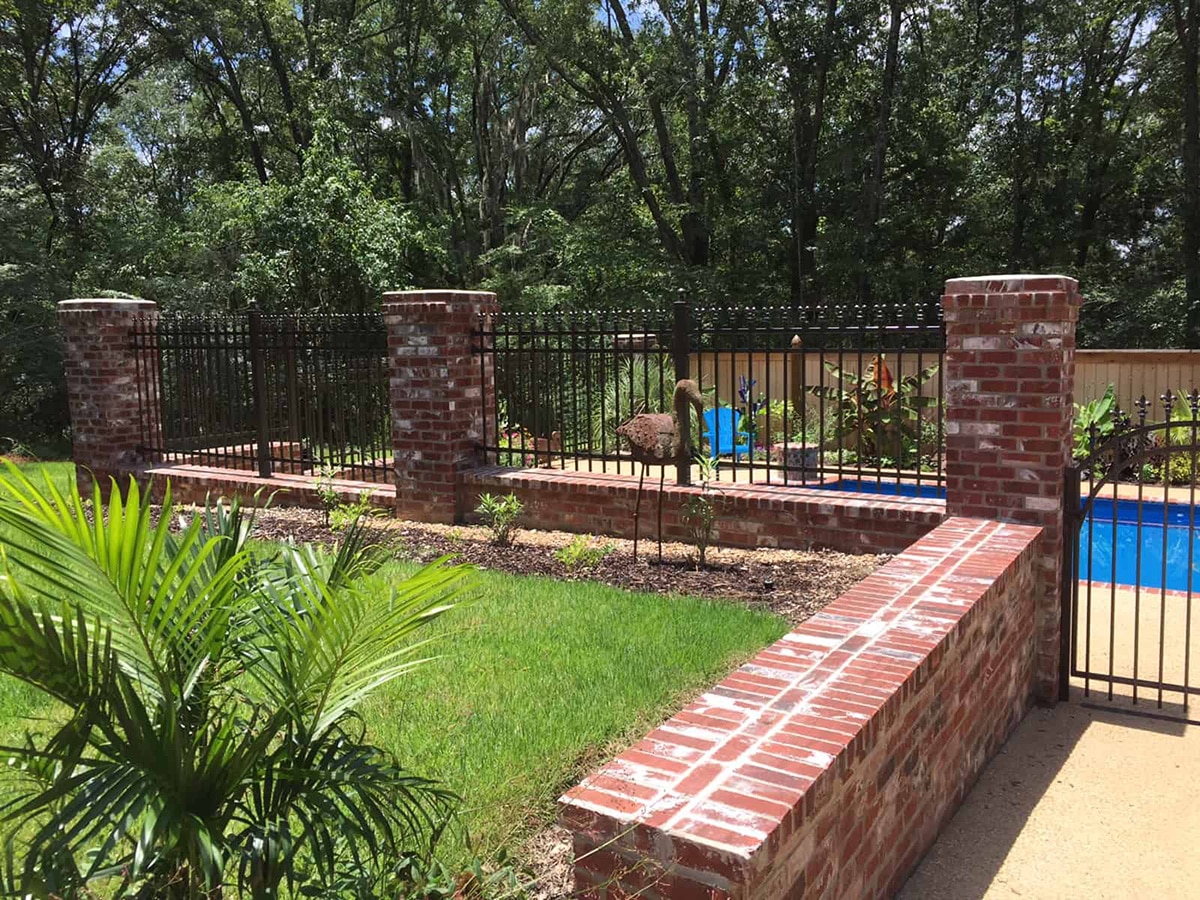
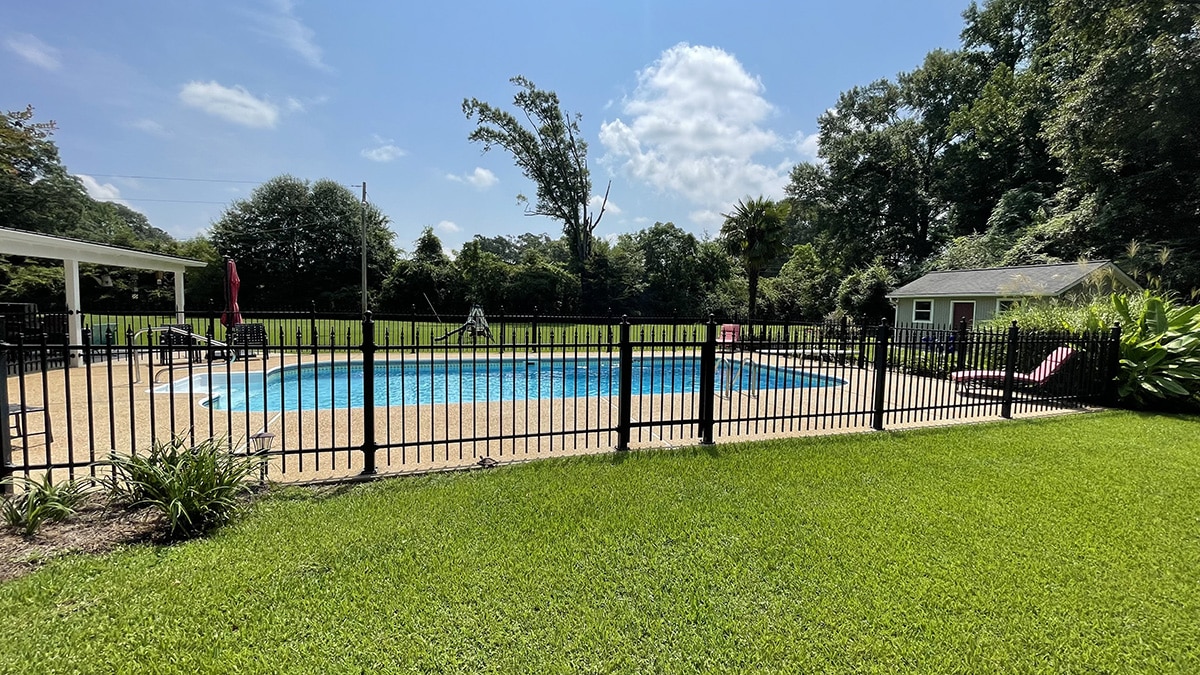
- Pool Enclosure Fencing: Meets pool safety code requirements while maintaining an open, elegant appearance.
- Garden and Landscape Fencing: Uses smaller decorative panels to border garden beds, define landscape zones, and add structure to outdoor spaces.
- Driveway Border Fencing: Runs along both sides of a driveway from the street to the garage or carport.
- Commercial Property Perimeter: Provides a professional, secure, and visually impressive boundary.
- School and Institutional Fencing: Durable, tamper-resistant perimeter fencing for schools, churches, government buildings, and parks.
- Estate and Large Property Fencing: Grand-scale fencing projects with matching gates for luxury residential estates.
- Pet Containment: Keeps dogs and other pets safely within the property while maintaining visibility.
- Privacy Accent Fencing: Combined with climbing plants or privacy screens for partial visual screening while retaining the iron aesthetic.
Is wrought iron fencing good for containing pets?
Yes, wrought iron fencing is an excellent choice for pet containment. Standard iron fence panels have a picket spacing of approximately 3.5 to 4 inches, which is sufficient to contain most medium and large dogs. Homes with small animals may need a fence with closer picket spacing, or a “puppy picket” configuration with horizontal rails approximately halfway up the fence panel to prevent small animals from squeezing through the gaps.
Can wrought iron fencing provide privacy?
Standard open-picket wrought iron fencing does not provide visual privacy in the way that a solid wood or vinyl fence does. This is a design feature preferred by homeowners who want to define their property boundary without creating a visual barrier that blocks light, views, or the feeling of openness.
Iron Works USA can discuss design options that balance privacy with wrought iron aesthetics. This can include planting dense evergreen hedges or climbing vines along the fence line, adding iron fence panels with a tighter lattice, or combining an iron fence frame with privacy inserts.
Is wrought iron fencing suitable for commercial properties?
Absolutely. Wrought iron fencing is widely used for commercial properties precisely because it projects a combination of security, professionalism, and aesthetic quality. We work with office parks, hotels, restaurants, retail centers, apartment complexes, schools, hospitals, and government facilities of all sizes and property specifications. Commercial clients can also benefit from our wholesale pricing and 0% APR financing options.
Pool Fencing Requirements and Options
Does wrought iron fencing meet pool safety code requirements?
Yes, wrought iron fencing is an accepted pool enclosure material as it meets all key pool safety code requirements. The primary requirements that pool fences must meet include:
- Minimum height thresholds
- Maximum gap sizes between fence components
- Self-closing and self-latching gate hardware
- No footholds or handholds that would make climbing easy
Wrought iron, when properly specified at the correct height and picket spacing, satisfies all of these requirements.
What is the minimum height requirement for a pool fence?
The most widely adopted pool fence height requirement, per the International Residential Code (IRC) and the guidelines of the Consumer Product Safety Commission (CPSC), is a minimum of 48 inches (4 feet) tall for residential pool enclosures. However, some states and municipalities have adopted higher minimums of 60 inches (5 feet).
Always verify the specific requirement with your local building department before specifying the height of your pool fence. Iron Works USA can confirm code-compliant specifications for your jurisdiction.
What are the picket spacing requirements for a pool fence?
Pool fence codes require that the openings in the fence cannot allow a four-inch sphere to pass through. This prevents small children from squeezing between pickets or getting their heads trapped. Standard iron fence picket spacing is typically 3.5 to 4 inches on center, with the actual clear gap between pickets being slightly less than 4 inches.
If you are using a decorative fence style with larger ornamental openings, you may need to adjust the design or add horizontal rails to ensure no gap exceeds 4 inches.
What gate requirements apply to a pool fence?
Safety codes require pool fence gates to automatically return to a closed position. They must also be self-latching, meaning the latch engages automatically when the gate closes. The latch must be located on the pool side of the gate and positioned high enough, typically above 54 inches from the ground, so that young children cannot reach it from outside. Double-opening gates that could swing toward the pool by accident are generally prohibited.
Can I use the same wrought iron fence panels for my pool enclosure as for my property perimeter?
Yes, you can achieve a unified aesthetic across your property. The key requirement is ensuring the fence height and picket spacing meet pool code standards. If your perimeter fence is already 48 inches or taller and has a standard picket spacing of less than 4 inches, the same panel style can typically be used for your pool enclosure. The gates in the pool enclosure section will need to be upgraded to self-closing, self-latching hardware that meets pool safety code.
Customization Options
How customizable are wrought iron fences?
Iron Works USA offers complete customization across every dimension of your fence project:
- Height
- Panel width
- Picket profile
- Spacing
- Finial style
- Top rail profile
- Decorative scrollwork
- Infill elements
- Post style and cap design
- Finish color
- Other custom motifs or artistic elements you want incorporated into the panels
There are virtually no design limitations as long as the concept is structurally sound.
Can I get a fence that matches my existing iron gate or railings?
Yes, especially with a full-service manufacturer like Iron Works USA. We fabricate iron doors, railings, gates, and fences all under one roof. Our design team can match picket profiles, scrollwork patterns, finial styles, rail dimensions, and powder-coat finishes to create a seamless, cohesive ironwork aesthetic across your property.
Can I add decorative scrollwork to my iron fence panels?
Yes. Scrollwork is one of the most popular decorative additions to wrought iron fence panels. Scrolls can be added as individual elements between pickets, as full decorative infill panels that replace standard picket sections, or as accent elements at post locations.
If you have a reference image or sketch of the scrollwork pattern you have in mind, bring it to your design consultation.
Can iron fence panels be cut to a non-standard width?
Yes. No fence project can consist entirely of full-width panels from start to finish. Corners, gates, and irregular lot shapes all create situations where a partial-width panel is needed to complete the run. Standard iron fence panels can be cut to shorter widths along the horizontal rails, while maintaining as consistent a picket spacing as possible. Panels can also be custom-ordered at a specific non-standard width for a cleaner, more finished look.
Can I add a gate to my wrought iron fence?
Yes, a matching gate is an important element of a complete fence system. We manufacture walk gates and driveway gates that match the height and style of fence panels. Walk gates typically range from 36 to 72 inches wide for pedestrian access, while driveway gates range from 10 to 20 feet or more for vehicle access. Gates come with appropriate hinge and latch hardware and can be configured as manual or automated systems.
Pricing, Cost Factors, and Financing
How much does a wrought iron fence cost?
Wrought iron fence costs vary based on various factors that affect the project scope. As a reference point, wrought iron fencing material typically costs between $25 and $120 per linear foot, depending on the style and grade. Most complete residential fence projects fall in a total project range of $1,400 to $10,000 or more, depending on scope. Highly ornamental or custom designs and larger commercial installations can exceed this range.
Iron Works USA offers free custom quotes based on your specific project dimensions and design requirements.
What factors affect the cost of a wrought iron fence project?
Several key variables drive the final cost of a wrought iron fence installation:
- Linear Footage: This is the total length of fence required.
- Fence Height: Taller fence panels use more material and may require heavier gauge posts.
- Design Complexity: Ornate scrollwork, decorative panels, and custom designs require more fabrication time and skilled labor.
- Picket Profile and Gauge: Heavier gauge metal and larger picket profiles offer greater strength and visual impact.
- Number of Gates: Each gate requires additional material, hardware, and installation procedures.
- Gate Automation: Automated gate systems add significant cost depending on the operator type and access control features.
- Post Type and Installation: Posts set in concrete footings require excavation, especially in rocky, sandy, or wet soil conditions.
- Terrain: Sloped or uneven yards may require stepping the panels or custom raked panels.
- Old Fence Removal: Removing and disposing of an existing fence adds labor and disposal fees.
- Permits: Building permits typically vary by jurisdiction.
- Land Survey: If your property lines are unclear, a survey may be required before installation.
- Delivery and Shipping: For out-of-area orders, freight costs are factored into the total project cost.
Wrought Iron Fence Cost Reference Guide
| Estimated Cost Range | |
| Plain Black Iron Fencing (per linear foot) | $25 – $30 |
| Galvanized Iron Fencing (per linear foot) | ~$30 |
| Ornamental Iron Fencing (per linear foot) | $30 – $120+ |
| Typical Residential Project Total | $1,400 – $10,000+ |
| Labor / Installation | $300 – $2,400+ |
| Single Panel Replacement | $50 – $120 per linear foot |
| Professional Repainting | $8 – $10 per linear foot |
| Fence Repair | $250 – $1,350+ |
| Building Permit | $20 – $500+ |
Does Iron Works USA offer financing?
We offer 0% APR financing for up to 60 months, allowing property owners to invest in quality custom wrought iron fences without paying the full project cost upfront. Ask our team about financing eligibility and available terms when you request your free quote.
Do you offer wholesale pricing?
Yes. We offer wholesale pricing on our fencing products. When you purchase directly from the manufacturer, you eliminate the intermediary’s margin and work with the people who fabricate your fence. This combination of manufacturer-direct pricing and 0% APR financing makes quality wrought iron fencing more accessible than many buyers initially expect.
Is a wrought iron fence worth the higher upfront cost?
Yes, from a total cost of ownership perspective and from a value perspective, wrought iron is consistently worth the investment. A wrought iron fence lasts 50 to 100 years with modest maintenance, never rots or warps, is repairable rather than requiring full replacement, and adds curb appeal and market value to the property.
In comparison, a wood fence may cost less upfront, but it requires repainting or staining every two to three years. It is also vulnerable to rot, warping, and insect damage, and typically needs full replacement within 15 to 20 years. Meanwhile, a vinyl fence requires little maintenance but is not repairable when damaged and does not add meaningful property value.
The cost per year of ownership for iron is highly competitive given its longevity.
Building Codes, Permits, and HOA Requirements
Do I need a permit to install a wrought iron fence?
In most jurisdictions, yes. Fence permits are required by local building authorities for new fence installations, replacements, or modifications to existing fences. Permit requirements vary significantly by city, county, and state. Some municipalities require permits only for fences above a certain height, while others require permits for any new fence, regardless of height. Permit fees typically range from $20 to several hundred dollars.
Iron Works USA recommends contacting your local building department before beginning any fence project to determine the specific permit and inspection requirements, as well as any zoning restrictions that apply to your address.
What building code requirements commonly apply to residential fences?
Building codes governing residential fences typically address:
- Height restrictions, with front yard fences often limited to 3 to 4 feet in height, while side and rear yard fences may be permitted up to 6 feet.
- Setback requirements specify how far a fence must be placed from the property line, sidewalk, or street.
- Corner lot visibility requirements may restrict fence height near street intersections to preserve traffic sightlines.
- Pool enclosures have specific safety codes, as discussed in the pool fencing section.
Always verify current code requirements with your local building authority, as codes vary significantly by municipality.
Should I verify my property line before installing a fence?
Yes. Installing a fence on or beyond your property line can create liability issues and disputes with your neighbors. In some cases, it may also require removing the fence at your expense. Before installation, verify your property lines using your property deed, survey plat, or a new land survey.
If you are unsure of your property lines, commissioning a new land survey from a licensed surveyor is the safest approach before proceeding with fence installation. Land surveys typically cost between $200 and $1,000, depending on your location and property size.
Do I need to notify my neighbors before installing a fence?
Many states and localities have legal notification requirements or good-neighbor conventions that apply when installing a fence along a shared property line. Some jurisdictions require you to notify adjacent property owners a certain number of days before installation.
Even where not legally required, communicating with your neighbors before installing a fence is a practical courtesy. If the fence will sit exactly on a shared property line, consider discussing whether the neighbor wants to cost-share, as in some jurisdictions, a boundary fence is a shared responsibility.
Should I check with my HOA before installing a wrought iron fence?
Yes. If your property is governed by a Homeowners Association, there may be provisions and restrictions governing fence installation. These cover permitted details, including materials, height, approved color and finish, style consistency with the neighborhood, and, in some cases, specific products or manufacturers approved.
We recommend getting written design approval from your HOA before beginning any fence installation to protect yourself from demands to modify or remove the fence. We can provide design documentation and material specifications to support your HOA approval submission.
Are there utility easement considerations for fence installation?
Yes. Before any post holes are dug, you are legally required in the United States to call 811, the national “Call Before You Dig” utility locating service. This triggers the locating of underground utilities, including gas lines, water pipes, electrical conduit, and telecommunications cables, in your fence installation area.
Striking a buried utility line is dangerous and expensive to repair. This call must be made at least two to three business days before any digging begins. We can coordinate with 811 and utility locating services before every installation.
The Installation Process
Does Iron Works USA install the fences they manufacture?
Yes. For customers within our service area, we provide full professional installation, including site measurement, fabrication, delivery, and on-site installation. Our installation team handles every aspect of the process, from post-hole excavation to final panel hanging and hardware installation. For customers outside our service area, we ship fences nationwide and provide detailed installation guidance.
What does the fence installation process involve?
A professional wrought iron fence installation follows a structured sequence of steps to ensure long-term stability and alignment:
- Site Preparation: Marking the fence line, verifying property lines, and calling 811 to locate underground utilities.
- Post Layout: Determining post locations at regular intervals along the fence line, typically every 6 to 8 feet, depending on panel width.
- Post Hole Excavation: Digging post holes to the required depth, which varies by region and fence height (typically 18 to 36 inches).
- Post Setting: Setting posts in concrete footings and allowing the concrete to cure before panels are hung.
- Panel Installation: Hanging fence panels between posts using brackets, screws, or welded connections.
- Gate Installation: Hanging gates with appropriate hinges, adjusting for level and swing clearance, and installing latch hardware.
- Final Inspection: Checking alignment, panel spacing, gate operation, and hardware security.
- Touch-Up: Applying touch-up paint or powder coat to any areas where the finish was disturbed during installation.
How deep do fence posts need to be set?
Post depth varies by region due to differences in soil composition and applicable regulations. As a general rule, posts should be buried at least one-third of their total length. In terms of frost depth:
- Regions Without Significant Winter Freeze: 18 to 24 inches
- Regions With Persistent Freeze-Thaw Cycles: Below the local frost line – around 20 to 36 inches or more, depending on the climate zone.
Your local building department can provide the required frost depth for your specific area.
Can wrought iron fence panels be mounted to masonry, concrete, or wood surfaces?
Yes. While standard installations involve steel posts set in concrete footings, wrought iron fence panels can also be mounted directly to existing masonry walls, concrete surfaces, brick pillars, stone columns, or wood posts. Surface-mounting requires appropriate hardware, depending on the substrate.
If mounted to an existing masonry wall or pillar, its structural integrity must be verified to ensure it can handle the additional load. We can advise you on the appropriate mounting hardware and method for your specific installation conditions.
Can I install a wrought iron fence on a concrete surface where I cannot dig post holes?
Yes. For situations where digging post holes is not possible, such as on a concrete patio, rooftop terrace, or solid concrete pad, surface-mount post bases are available. These are anchored to the concrete surface using epoxy anchor bolts or concrete screws, providing a secure base for the fence post above the surface. The surface must be structurally sound and thick enough to provide proper anchor engagement.
Can fence installation be done in any season?
Yes. Wrought iron fence installation can proceed year-round. For cold-weather installations, concrete must be mixed, poured, and cured within the temperature tolerances specified on the concrete bag. Winter installation may also take longer due to harder ground conditions. Our professional installers are experienced in year-round installation and can advise on the best approach for your climate and timeline.
Installing on Sloped or Uneven Terrain
Can wrought iron fencing be installed on a sloped yard?
Yes, and handling slope is one of the most common planning considerations for fence installations. Wrought iron fences can be adapted to sloped terrain using either the step-down method or custom raked panels. The right approach depends on the degree of slope, the desired appearance, and the specific requirements of your fence application.
What is the step-down method for fencing on a slope?
The step-down method involves installing each successive fence panel at a lower or higher elevation than the previous one, creating a staircase-like profile. Each panel remains level within itself, and the height difference between panels is accommodated by varying the post height at each step. This method works well on gradual to moderate slopes and is the most common approach for standard iron fence panels.
What is a raked or custom panel for a sloped fence installation?
A raked panel is a custom-fabricated fence panel in which the top and bottom rails follow the slope of the terrain rather than being horizontal. The pickets remain vertical while the rails angle to match the grade. This creates a fence that follows the ground contour smoothly without the stepped profile. Raked panels are used for steeper slopes where the step-down method would create unacceptably large gaps at the base or for applications where property owners prefer a cleaner sightline.
What if my yard has a very steep or irregular slope?
In these cases, custom raked panels are the best solution. Alternatively, a combination of these approaches can be used. Raked panels can be used in the sections with the steepest grade, while stepped panels are for areas where the grade is more moderate. In some extreme cases, a retaining structure or graded fill may be needed to create a workable installation surface. Our experienced team can assess your terrain and recommend the most practical approach for your specific site conditions.
Maintenance and Care
How much maintenance does a wrought iron fence require?
Wrought iron fencing is genuinely low maintenance compared to materials like wood, which requires sanding, staining or painting, and regular sealing. Maintenance tasks for an iron fence include:
- Periodic cleaning to remove dirt and grime
- Regular inspection of the powder coat finish for chips or scratches
- Prompt touch-up of any compromised finish areas to prevent rust
- Annual lubrication of gate hinges and latch hardware
Properties in mild inland climates require a simple annual cleaning and inspection. Properties in coastal environments exposed to salt air may require more frequent maintenance.
How do I clean a wrought iron fence?
Cleaning a wrought iron fence is a straightforward process:
- Rinse the fence with a garden hose to remove loose dirt and debris.
- Mix a solution of warm water and mild dish soap and apply it with a soft brush or sponge.
- Rinse thoroughly with clean water to remove all soap residue.
- Dry the fence with a lint-free cloth or let it air-dry in direct sunlight.
Never use abrasive pads, wire brushes, or harsh chemical cleaners to scrub a powder-coated surface, as these will damage the finish.
Will a wrought iron fence rust?
Wrought iron has natural corrosion resistance that exceeds regular steel, but it is not immune to rust when the protective finish is compromised. The powder coat finish applied to all Iron Works USA fences creates a durable barrier that prevents moisture from reaching the iron beneath. As long as that finish remains intact, the risk of corrosion is low.
Addressing any finish damage promptly with touch-up paint, primer, and topcoat will prevent rust from developing or spreading. Fences in coastal areas with salt air exposure are more susceptible to finish degradation and should be inspected more frequently.
How do I remove rust from my wrought iron fence?
Surface rust should be treated as soon as it is noticed to prevent it from expanding:
- Use a wire brush or fine steel wool to remove loose rust flakes, working carefully with the grain of the metal.
- For stubborn rust stains, apply a commercial chemical rust dissolver to the affected area.
- Once the rust is treated and the surface is clean and dry, apply a rust-inhibiting metal primer, then a topcoat that matches your fence’s powder-coat color.
For widespread rust covering large areas of the fence or that appears structurally significant, contact us for an assessment.
How often should I repaint or refinish my wrought iron fence?
A quality powder coat finish on a well-maintained iron fence can remain in good condition for 5 to 10 years or more before requiring a full refinish. In coastal or high-humidity climates where finishes degrade faster, this may be needed every 3 to 5 years.
If you notice dullness, chalking, crazing, flaking, or multiple rust initiation points despite regular spot maintenance, a full strip-and-recoat may be more practical than continuing spot repairs.
How do I maintain the gate hinges and hardware on my iron fence?
Gate hinges, latches, and any moving hardware components should be inspected and lubricated at least once or twice a year. Use a silicone-based lubricant or a light machine oil on hinge pivot points and latch mechanisms to maintain smooth operation and prevent corrosion at contact points.
Avoid using WD-40 as a long-term lubricant, as it attracts dust and provides only temporary moisture displacement rather than lasting lubrication. Keep the area around gate posts clear of accumulated soil and vegetation that can trap moisture against the post base. Inspect the gate for any signs of sagging or misalignment and address issues early before they become structural problems.
Can individual fence panels or sections be replaced without replacing the entire fence?
Yes. Unlike other fence types, individual wrought iron panels can be replaced without disturbing the rest of the fence. If a single panel is damaged by a vehicle impact, a fallen tree branch, or vandalism, we can fabricate a replacement panel to match the existing fence. As long as the posts are in good condition, replacing a single panel or a small section is far more economical than replacing the entire fence.
Wrought Iron vs. Other Fence Materials
How does wrought iron fencing compare to wood fencing?
Wood fencing is popular for its natural warmth and initial affordability, but it requires substantial ongoing maintenance. Wood is vulnerable to moisture absorption, rot, warping, cracking, UV fading, and termite or carpenter bee damage. It also requires repainting or restaining every 2 to 3 years and full replacement every 15 to 20 years in most climates.
In comparison, wrought iron does not rot, warp, crack, or suffer from insect damage. It holds its structural integrity and appearance far longer than wood, with a lifespan of 50 to 100 years when properly maintained. The overall cost of ownership over 30 years is often lower for iron than for wood, once cumulative maintenance and replacement costs are factored in.
How does wrought iron fencing compare to vinyl fencing?
Vinyl fencing is frequently marketed as a low-maintenance alternative to wood and iron. While vinyl can resist moisture and rot, its limitations are its strength, security, and design versatility. Vinyl can crack or become brittle in extreme cold, fade under prolonged UV exposure, and is not repairable once cracked or broken. From a security standpoint, vinyl provides far less resistance to forced entry than iron. Aesthetically, vinyl cannot replicate the handcrafted character of wrought iron.
How does wrought iron fencing compare to aluminum fencing?
Aluminum is lightweight, naturally rust-proof, and requires no finish maintenance. However, aluminum is significantly weaker than iron. A four-foot aluminum fence panel can weigh around 12 pounds, while a comparable iron panel weighs approximately 45 pounds. Its weight difference can impact its structural rigidity and resistance to physical deformation. Low-gauge aluminum pickets can be bent by hand, compromising security.
How does wrought iron fencing compare to chain link fencing?
Chain link fencing is the most economical fencing option and serves well in purely functional applications. However, it provides virtually no aesthetic value, minimal security against a determined intruder who can easily cut it, and no curb appeal. Chain link is appropriate when budget is the overriding concern and aesthetics are not a priority.
Fence Material Comparison Overview
| Wrought Iron | Aluminum | Wood | Vinyl | |
| Strength and Security | Excellent | Moderate | Moderate | Poor |
| Rust / Rot Resistance | Very Good | Excellent | Poor | Excellent |
| Design Flexibility | Excellent | Moderate | Good | Limited |
| Maintenance Required | Low | Very Low | High | Very Low |
| Lifespan | 50 to 100 Years | 30 to 50 Years | 15 to 20 Years | 20 to 30 Years |
| Property Value Impact | Excellent | Moderate | Moderate | Low |
| Relative Cost | Moderate to High | Moderate | Low to Moderate | Low to Moderate |
Property Value and Return on Investment
Does a wrought iron fence add value to my home?
Yes. A well-designed wrought iron fence can be one of the highest-impact exterior upgrades for curb appeal. It signals quality and pride of ownership to prospective buyers who visit the property. Many real estate professionals cite premium fencing as a strong contributor to a property’s perceived overall quality, as it can boost market value, depending on the neighborhood and local market conditions.
Why does wrought iron fencing add more value than wood or vinyl fencing?
Wrought iron fencing communicates a care for craftsmanship and an investment in aesthetics and durability. A prospective home buyer can recognize immediately that the owner invested in quality and that the fence will not need to be replaced anytime soon. Iron fences also photograph extremely well, which can improve first impressions on online listings.
Does a fence increase a home's appeal for families with children and pets?
Yes, significantly. A fully enclosed fenced yard is a sought-after feature among buyers with young children and dogs. Parents of young children place enormous value on a safe, enclosed outdoor space where children can play without supervision, directly adjacent to a traffic area. Dog owners similarly prioritize a fenced yard as a fundamental lifestyle requirement. A wrought iron fence that fully encloses the backyard satisfies these priorities while adding aesthetic value.
Ordering, Shipping, and Lead Times
How do I get started ordering a wrought iron fence from Iron Works USA?
Contact Iron Works USA online or call (877) 281-8232 for a free quote. During your initial conversation, you will discuss the type of fence you need, its specifications, and your timeline. For in-area clients, we can schedule an on-site assessment. Otherwise, our team will guide you through the measurement process. From there, we can design and fabricate your fences. We can either provide professional installation or, for areas outside our scope, nationwide shipping.
Do you ship fences nationwide?
Yes. We design, manufacture, and ship wrought iron fencing directly to customers throughout the United States. Our fences are carefully packaged to prevent damage in transit and shipped via freight carrier. For customers outside our direct service area, we provide comprehensive guidance on installation and are available to answer any questions that arise during the installation process.
How long does it take to receive a custom iron fence?
Lead times depend on the complexity of your order, the volume of custom fabrication required, and current production schedules. Standard design orders from the existing catalog can be produced more quickly than fully bespoke custom designs, which may have a 10 to 12-week lead time depending on the level of customization involved.
We can provide a specific production and shipping timeline at the time of order. We recommend reaching out to us as soon as possible, especially if your project is tied to a landscaping installation or a specific property event.
What information do I need to provide to get an accurate quote?
Prepare the following information:
- Total linear footage of fence needed or the dimensions of your property perimeter
- Desired fence height
- Preferred style – if possible, provide reference photos of what you envision
- Number and width of any gates needed, and whether they need to be automated
- Type of ground surface and whether your yard is flat or sloped
- The approximate grade, if your property is sloped
- Preferred timeline
If you can send photos of the installation site and your property, this can help our team provide more personalized recommendations.
Warranty, Support, and Additional Questions
Does Iron Works USA offer a warranty on wrought iron fences?
We stand behind the quality and craftsmanship of our fencing products and offer warranties against defects in materials and workmanship. For specific warranty coverage details and terms, contact our team directly.
What are your business hours?
Our team is available Monday through Friday from 9:00 AM to 5:00 PM and Saturday from 9:00 AM to 1:00 PM.
Can you help with repairs to an existing wrought iron fence?
Yes. If you have an existing wrought iron fence that has been damaged, has developed rust, or needs new sections to match an expansion of your property, we can assess the situation and provide options. In many cases, damaged panels can be replaced individually without disturbing the rest of the fence. Contact us to describe your existing fence and the nature of the repair needed.
Do you provide garden and small decorative fencing?
Yes. Garden fences are typically shorter in height and are used to border landscape beds, define garden zones, create low property boundaries, or add decorative structure to outdoor spaces. Custom garden fence heights, widths, and decorative details are all available.
Why should I choose Iron Works USA for my wrought iron fence project?
Iron Works USA provides:
- Decades of manufacturing experience
- Genuine custom fabrication capability
- Direct manufacturer pricing
- 0% APR financing for up to 60 months
- Full-service approach that covers initial design consultation to professional installation
We serve residential and commercial clients with a commitment to quality and craftsmanship. Every fence is built in the USA to your exact specifications. Whether you need a simple decorative garden border, a full residential perimeter fence with automated gates, or a large-scale commercial security fence, Iron Works USA has the expertise to deliver a product that exceeds your expectations.